AT A GLANCE
- AOD-9604 is a growth-hormone fragment analogue.
- Its research identity is distinct from full-length growth hormone.
- A meaningful comparison starts with the model and the measured outcome.
Start with the fragment
A familiar parent protein can make a smaller peptide sound easier to understand than it really is. AOD-9604 is a useful example: its connection to human growth hormone explains where the research story began, but does not make every finding about the complete hormone applicable to the fragment. The practical question is what researchers tested with AOD-9604 itself.
What the early metabolic work examined
Heffernan and colleagues studied AOD9604 in obese mice and mice lacking beta-3 adrenergic receptors. Their experiments examined body composition, fat metabolism and receptor-related responses. Differences between experimental groups helped the team explore how the observed effects might arise. These were animal experiments, not a demonstration of weight-management benefits in people. [1]
- 01AOD-9604 identity
- 02Experimental model
- 03Measured response
- 04Scope of the finding
Conceptual reading guide — not a biological pathway or an efficacy comparison.
Why a mechanism is interesting
Mechanistic studies can help separate a broad observation from a more precise question. If a response changes when part of a biological pathway is absent, researchers gain a clue about that pathway’s role. A clue is still different from a complete explanation: alternative mechanisms, experimental conditions and replication all matter. This is the scientific value of a carefully controlled model.
Read the label alongside the paper
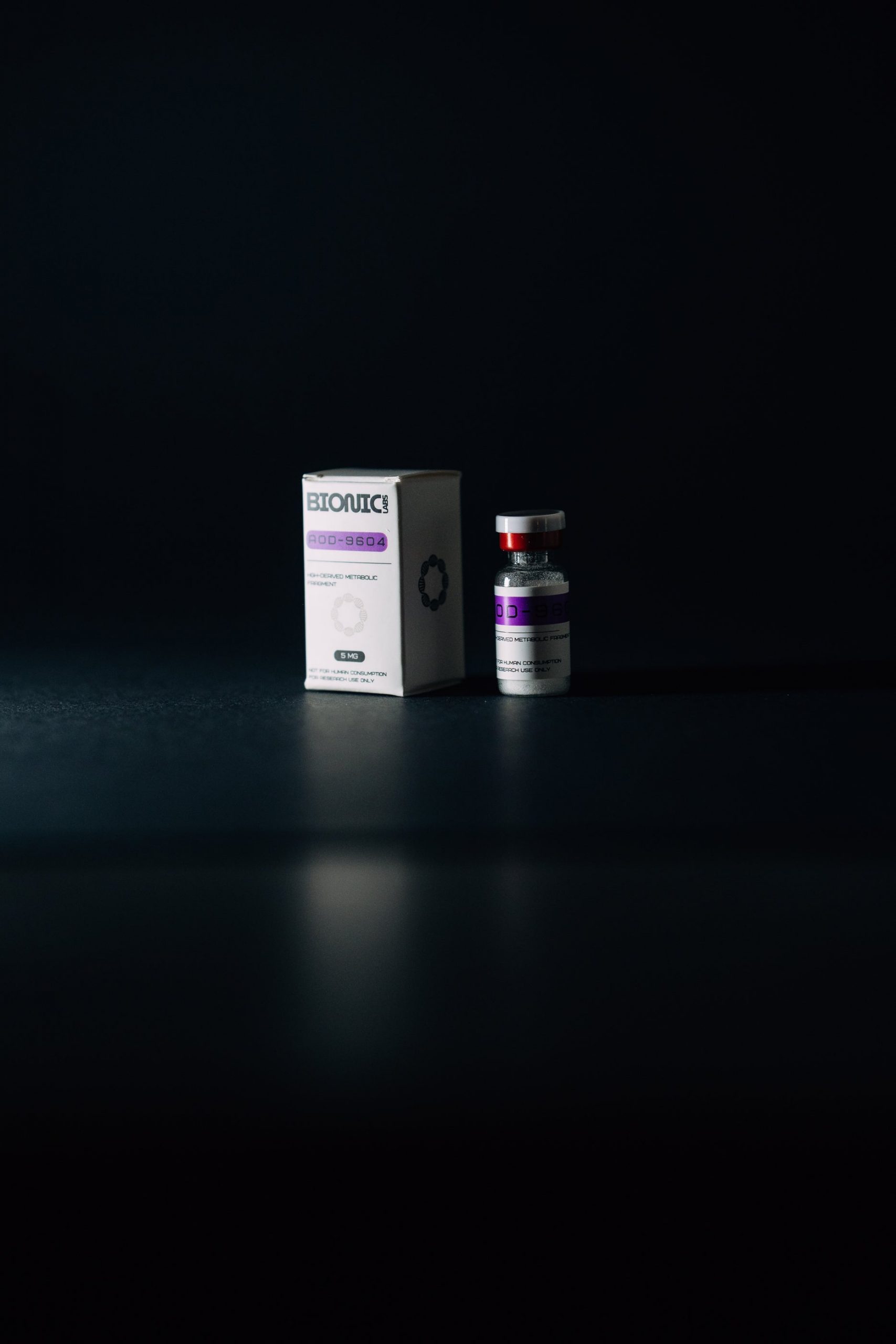
For the Bionic Labs AOD-9604 5mg presentation, the amount describes one vial. It does not define the purity, a biological response or a recommended application. When compiling a research record, keep the compound identity, labelled amount and batch report together. This prevents a paper about one material from becoming a shortcut for evaluating a different preparation.
A better way to compare claims
When an article promises a simple outcome, trace it back to the original experiment. Was the subject a cell, an animal or a person? What was actually measured? Was there a comparator? These questions are more useful than treating a hormone-related name as a general promise. They also make discussions with a supplier more specific: ask for an exact identity and a matching batch record.
| Term | What it describes | Question to ask |
|---|---|---|
| AOD-9604 | A particular fragment analogue | Was this exact material studied? |
| hGH | The full parent hormone | Is the evidence about a different material? |
| 5 mg | Labelled amount in one vial | What is the reporting basis? |
| Metabolic effect | An outcome in a defined model | Does the study support this specific claim? |
Questions, answered.
Is AOD-9604 another name for hGH?
No. Keep the fragment analogue and the full protein separate in your searches and material records.
What is the most useful first document?
A specification and analytical report that identify the AOD-9604 batch available to order.
Sources & further reading
- Heffernan et al. · Endocrinology · 2001
Primary animal study of AOD9604 and lipid metabolism.