AT A GLANCE
- GHK-Cu combines a tripeptide identity with copper association.
- Skin-cell findings describe a specific experimental context.
- A vial amount and a finished product concentration are different measurements.
The small detail in the name
The Cu in GHK-Cu carries important information. It refers to copper association with the glycine–histidine–lysine tripeptide. Copper-free GHK and copper-associated GHK-Cu should therefore remain distinct in material comparisons. The difference is easy to miss when a product title is shortened to copper peptide or GHK. [1]
Why researchers study skin cells
Kang and colleagues investigated copper-GHK in keratinocytes, reporting changes in integrin expression and p63 positivity. These are cellular measurements that help researchers examine how cells behave in a defined setting. They provide a specific reason for scientific interest; they are not a direct measurement of a finished skincare product’s performance. [1]
- 01GHK-Cu identity
- 02Cellular research
- 03Formulation context
- 04Product-specific evidence
Conceptual reading guide — not a biological pathway or an efficacy comparison.
From a cell result to a formulation question
A finished formulation adds another layer of detail. Its ingredients, concentration, physical properties and intended application are part of the product being evaluated. A paper about a named peptide does not automatically describe every formulation that includes it. Keeping the material and the finished product separate makes comparisons more honest and makes technical questions much easier to answer.
Make sense of 100 mg
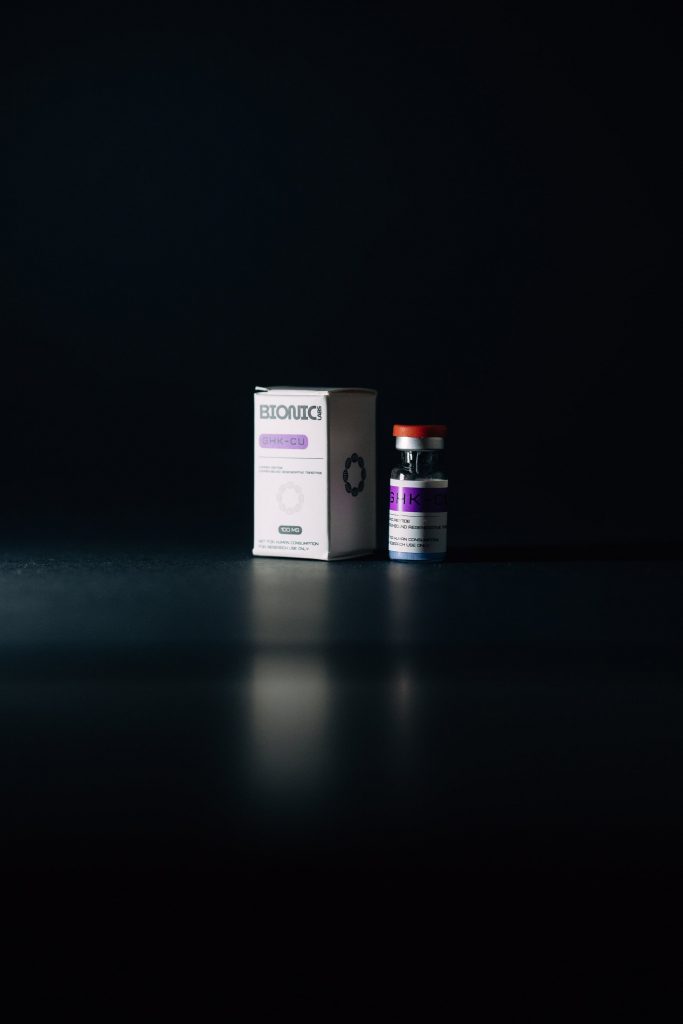
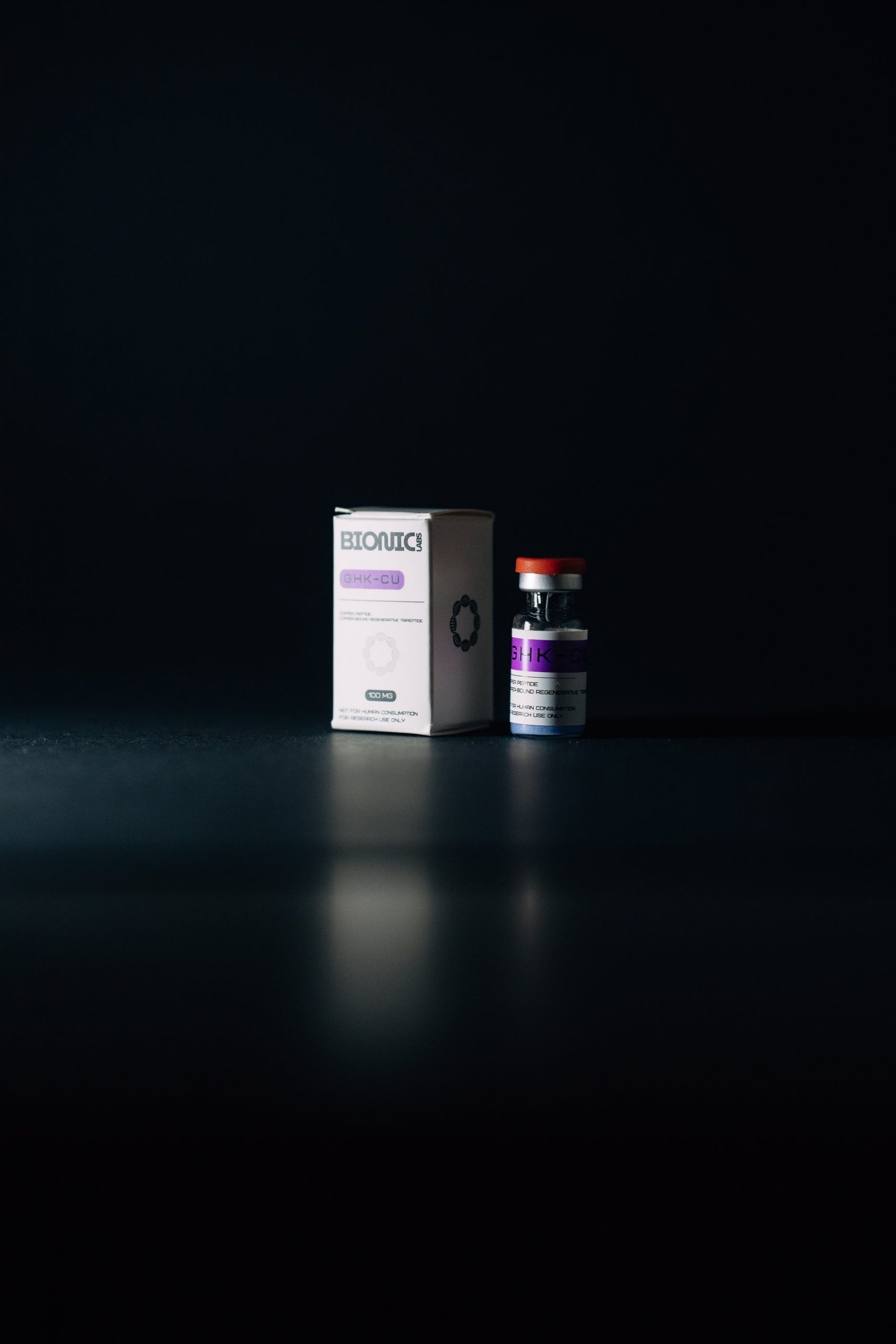
The GHK-Cu 100mg catalogue presentation states an amount per vial. It is not a statement that a product is 100% active, and it is not a percentage concentration. A concentration needs an amount relative to a defined volume or mass. Without that second part, converting a vial label into a concentration would leave out essential information.
What to look for in a clear specification
Begin with the copper-associated identity and the batch reference. Then review the reported methods, results and the basis of the labelled quantity. If you are comparing two records, check whether both describe GHK-Cu or whether one concerns another GHK form. A precise identity match is the foundation for a useful comparison, even before any biological claims are considered.
| Label or term | What it tells you | What it does not establish |
|---|---|---|
| GHK-Cu | Copper-associated peptide identity | Equivalence to copper-free GHK |
| 100 mg per vial | A stated amount | A percentage concentration |
| Keratinocyte study | A cell-model observation | A finished product result |
| Batch report | Analytical information for a batch | Clinical suitability |
Questions, answered.
Is every copper peptide product the same?
No. Confirm the exact peptide identity and the product specification rather than comparing a broad category name.
Can the vial amount be read as a skincare concentration?
No. An amount per vial does not define a concentration or a finished formulation.
Sources & further reading
- Kang et al. · Archives of Dermatological Research · 2009
Primary keratinocyte study of copper-GHK.